Estás debajo de un fregadero y el mensaje entra igual.
Un servicio de respuesta con IA para fontaneros y gremios que trabaja en el chat, no al teléfono.
OpusDone contesta las tres preguntas de siempre — si cubres mi zona, cuánto cobras por el desplazamiento, si puede venir alguien hoy — mientras tú tienes las dos manos mojadas. Funciona en el chat de tu web y en Telegram; no coge el teléfono. Ofrece horas de tu calendario real y agenda el trabajo, volviendo a comprobar la disponibilidad justo en el momento de escribirlo. Para cuando te has secado y estás otra vez en la furgoneta, el trabajo está en tu agenda y no en manos de otros dos números.
- Contesta mientras estás en un trabajo
- Solo chat, nunca el teléfono
- Avisos en tu móvil por Telegram
Revisado el
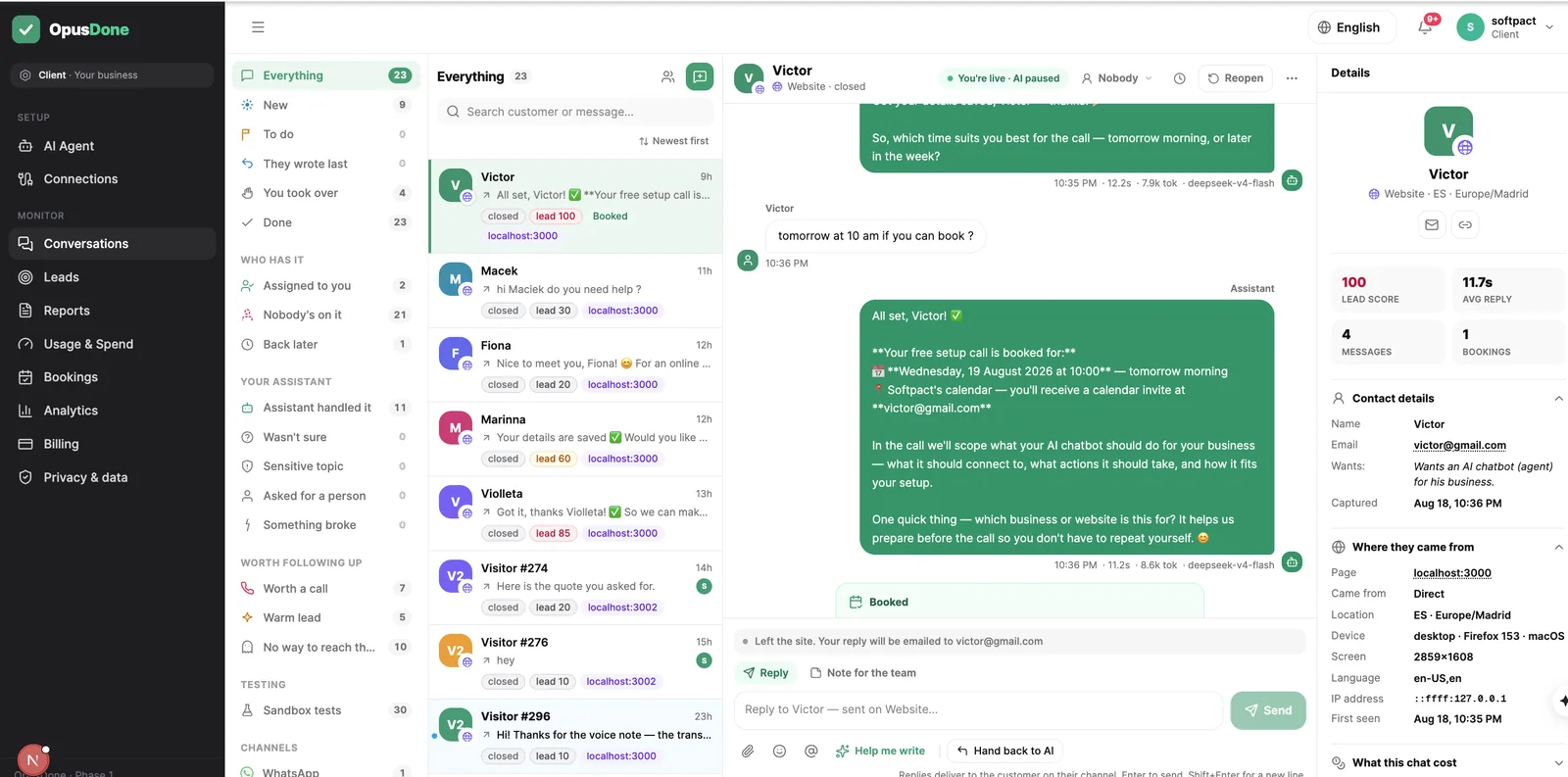
opusdone.com/go/demo
Cada trabajo que acabas es una superficie que ya es tuya.
La furgoneta aparcada delante de la casa de un cliente la lee toda la calle. La factura se lee dos veces. Un código en cualquiera de las dos responde la duda del siguiente sobre el desplazamiento y sobre qué cubres, sin que te suene el móvil debajo de un fregadero.
Ese código abre nuestro propio asistente de OpusDone, el mismo que tendría tu negocio. Da un rango de precio solo donde tú lo hayas fijado, y nunca presupuesta un trabajo del que no le han hablado.
Debajo de un fregadero, las dos manos mojadas
El trabajo no se para porque alguien quiera un presupuesto.
- 09:12
Las dos manos mojadas
Entra un mensaje de alguien que tiene la cocina inundada, y tú estás tumbado debajo de un mueble.
- 09:13
Contestado sin ti
Da tu precio de desplazamiento y los barrios que cubres, directamente de las respuestas que aprobaste.
- 09:15
Llega una foto
Confirma que la foto ha llegado, dice sin rodeos que no puede abrirla, y te pasa la conversación.
- 12:40
Jueves por la mañana, agendado
El hueco respeta la antelación que necesitas y el margen que has puesto entre trabajos.
- 17:50
Una sola llamada de vuelta
Llamas a la persona cuya puntuación pasó de cincuenta en vez de repasar los mensajes de todo el día.
¿Por qué las consultas llegan siempre en mitad de un trabajo?
Con las manos mojadas no se coge el móvil
Todas las consultas llegan mientras estás en un trabajo, porque siempre estás en un trabajo. El mensaje se queda cuatro horas en la bandeja de notificaciones, y cuatro horas son tres presupuestos para una cisterna que pierde.
La mitad de las consultas caen fuera de tu zona
La gente escribe al primer profesional que le sale en el mapa. Averiguar que están veinte kilómetros más allá de donde tú llegas cuesta los mismos dos mensajes que un trabajo de verdad, y siempre a las nueve de la noche.
Nadie apunta los datos
Un nombre, un teléfono, el código postal, si es la caldera o un atasco. La mitad viene en el mensaje y el resto lo persigues mañana, y para entonces el trabajo ya es de otro.
De tu zona de trabajo a una obra en la furgoneta
Media hora en la mesa de la cocina, una sola vez. Después contesta mientras tú tienes las dos manos debajo de un fregadero.
- 01
Lee la web que ya tengas, sea la que sea
El rastreo busca tus páginas de servicios, precio de desplazamiento, preguntas frecuentes, contacto y horario por palabras clave en inglés y en español, y luego lee la meta description, las etiquetas Open Graph y el JSON-LD para sacar tu teléfono, tu dirección y tu horario. Una pasada del modelo lo convierte en servicios estructurados, preguntas frecuentes, políticas y de cuatro a diez fichas de conocimiento en borrador. Solo rellena campos vacíos, así que lo que hayas escrito tú no lo sobrescribe ningún rastreo posterior. - 02
Apruebas lo que tiene permitido prometer
Al asistente solo le llegan las fichas que marcas como activas: los borradores, las importaciones pendientes de aprobación y las fichas archivadas o rechazadas no existen para él. Aquí es donde dejas atado lo que luego da discusiones: la zona que cubres, el desplazamiento, si haces gas, qué no tocas. Un filtro de calidad quita el texto de navegación y los avisos de cookies y descarta lo que baje de 80 o pase de 4.000 caracteres, así que no acaba nada vago en boca del asistente. - 03
Fijas horario, márgenes de desplazamiento y antelación
Horario de trabajo, y días cerrados marcados haciendo clic en un día o arrastrando un rango sobre el calendario del mes. La antelación mínima viene puesta en 120 minutos y los huecos en 30, sobre una rejilla fija de 15 minutos, con un horizonte de 60 días y los márgenes a cero: pon un margen de 30 minutos y dejará de agendarte dos trabajos seguidos en puntas opuestas de la ciudad. Los cambios le llegan al asistente en unos 15 segundos. - 04
Conectas el calendario por el que de verdad te riges
Google Calendar por OAuth, o Cal.com con una clave de API. Lee todos los calendarios que marques como ocupados y los fusiona, así que llevar a tu hija al colegio, apuntado en tu calendario personal, bloquea un hueco de trabajo en lugar de quedarse debajo de uno. Puede leer y crear eventos, y no puede borrar tus calendarios. - 05
Lo pruebas antes de que lo vea un solo cliente
El sandbox ejecuta tus instrucciones reales y tus herramientas reales y se detiene antes de escribir nada: no agenda ningún trabajo, no puntúa ningún lead, no envía ningún aviso. Escribe los mensajes que recibes de verdad: no tengo agua caliente, una fuga debajo del fregadero, cuánto vale un enchufe nuevo. Es gratis y nunca está bajo llave, así que puedes cambiar la redacción y volver a probar hasta que suene a ti. - 06
Una línea en tu web, y ya te cubre las tardes
El widget es una sola etiqueta de script en la web que ya tienes, sin rehacer nada, y Telegram es el segundo canal activo; los dos entran por la misma función, así que la respuesta no depende de por dónde empezó el cliente. El horario y los días cerrados se comprueban antes de ofrecer un hueco y otra vez antes de escribirlo, la disponibilidad se vuelve a leer justo al escribir para que dos clientes no puedan quedarse con la misma mañana, y los ids de evento son deterministas, así que un reintento no puede duplicarte una reserva. Responde en el idioma en el que haya escrito el cliente, y añade el aviso de IA que exige el artículo 50 del Reglamento Europeo de IA una vez por conversación.
El trabajo se agenda solo mientras estás debajo de un fregadero.
Recoge la dirección, el problema, cómo entrar y un teléfono, dice lo que tus entradas activas dicen sobre los desplazamientos, y te pone el trabajo en el móvil. Las tres llamadas que has perdido esta tarde se convierten en tres trabajos en tu agenda.
¿Qué puede responder OpusDone mientras tú trabajas?
Nada le llega a un cliente hasta que tú lo has aprobado.
- Qué barrios cubres, y cuáles declinas con educación.
- Tu precio de desplazamiento, con tus propias palabras.
- Qué cuenta como urgencia, y qué no.
- Horario, días cerrados y la semana que cierras en agosto.
- Cuánta antelación necesitas para que alguien pueda agendar.
- Que una foto no se puede leer, y que te llega a ti.
- Nada de mirar stock, nada de «lo miro y te digo».
- Duración del trabajo, margen entre trabajos, con cuánto tiempo coges obra.
- Señales y condiciones de pago, dichas sin rodeos — y cobradas al reservar.
- Cerrar un día es un clic, reflejado en tu calendario.
- Qué consultas merecen una llamada, puntuadas y ordenadas.
Qué cubre, y cómo te llega a ti.
Vive en tu web y en Telegram
El widget es una etiqueta de script en la web que ya tienes, sin iframe, y Telegram es el segundo canal activo. Los dos son chat. No coge tu teléfono, y si alguien cierra la pestaña antes de que hayas contestado, tu respuesta le llega por email en vez de evaporarse.
Widget de la web y Telegram. Ni WhatsApp, ni SMS.
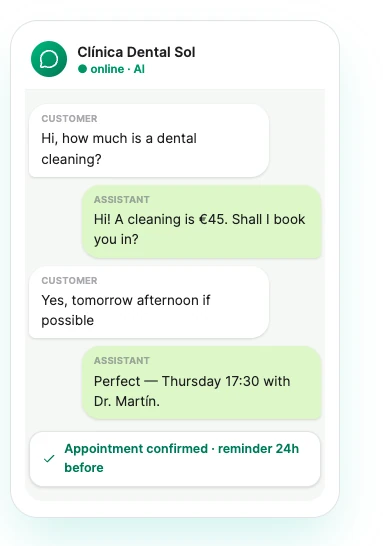
Las preguntas que ya no tienes que contestar tú
Cinco que responde hoy mismo, con el conocimiento que tú aprobaste: «¿Cubrís Gràcia y Sant Gervasi?» · «¿Cuánto cobráis el desplazamiento?» · «¿Hacéis mantenimiento de calderas además de reparaciones?» · «¿Me dais presupuesto por escrito antes de empezar?» · «¿Estáis dados de alta y con seguro?».
Los datos quedan apuntados antes de que leas una palabra
Nombre, contacto, zona y en qué consiste el trabajo se convierten en un lead con una puntuación transparente — teléfono +40, email +40, agendado +40, nombre +10 — y el aviso te salta en 50. Como mucho un aviso por persona cada 15 minutos. Las horas de silencio vienen puestas de 22:00 a 08:00 y solo retienen los canales que hacen ruido en el móvil; el email de escalada se envía siempre.

¿Qué no hará nunca OpusDone en tu nombre?
La forma más rápida de perder un cliente es una promesa que tú no hiciste.
No pondrá precio a un trabajo que no ve
Solo los desplazamientos y las tarifas que aprobaste como activos. Nada de estimar la reparación, nada de horquillas, nada de «pues serán unos».
No prometerá una furgoneta esta tarde
Solo ofrece horas que tu calendario tiene libres de verdad, contrastadas con tu horario y con tus días cerrados y leídas otra vez justo al escribir. No puede inventarse una hora de llegada ni prometer un tiempo de respuesta.
No mirará la foto de la fuga
Ninguna comprensión de imágenes ni de documentos, de ningún tipo. Le dice al cliente sin rodeos que eso tiene que verlo una persona, y pasa la conversación.
No cogerá el teléfono
Esto es solo chat, en tu web y en Telegram. Quien te diga que su IA contesta tu fijo te está vendiendo otra cosa.
Dudas de fontaneros y gremios, resueltas
¿Qué me llega al móvil de verdad cuando algo me necesita?
¿Y una urgencia de verdad a las tres de la mañana?
No tengo una web que merezca ese nombre. ¿Me sirve igual?
Una tubería reventada y una reforma de baño de un martes no son la misma llamada.
¿Puede agendar con un técnico concreto?
Alguien le pide que le rebaje algo del precio.
No puedo presupuestar un trabajo que no he visto. ¿Eso lo estropea todo?

Más para gremios y reformas
Bajo el fregadero y el jueves ya cerrado
Una agenda para el negocio, o una para cada técnico, en Google Calendar o en Cal.com. Se aceptan adjuntos de hasta 25 MB y siempre crean una escalada, porque no hay capacidad de visión y nunca va a fingir que ve la fuga.
Empezar