Tu código QR impreso
El cristal, el mostrador, un cartel, un folleto, una factura, la furgoneta. Al cliente solo le hace falta la cámara del móvil, y es la opción que funciona sin tener web.
OpusDone responde a un cliente en el widget de tu web o en tu bot de Telegram, consulta tu calendario en tiempo real y reserva la cita dentro de la misma conversación. Todos los canales entran en la misma función, así que la respuesta no depende de la puerta por la que llegó el cliente. Esta página sigue un solo mensaje por cada paso que da el runtime.
Revisado el
Ninguno de estos pasos es opcional, y ninguno depende de que el cliente sea educado.
Todo lo de arriba es la puesta en marcha. Esta es la parte que casi ningún negocio pequeño planifica: qué superficie tiene delante el cliente cuando se le ocurre la pregunta. El mismo conocimiento, las mismas reglas sobre lo que nunca dirá, una sola bandeja.
El cristal, el mostrador, un cartel, un folleto, una factura, la furgoneta. Al cliente solo le hace falta la cámara del móvil, y es la opción que funciona sin tener web.
Una etiqueta de script en la web que ya tienes. La conversación que abre es la misma que habría abierto un código impreso: el mismo conocimiento y la misma bandeja.
Nadie está mirando el widget. Aun así, esto es lo que pasa.
Alguien abre el widget antes de que tú hayas abierto la puerta y pregunta si abrís el domingo.
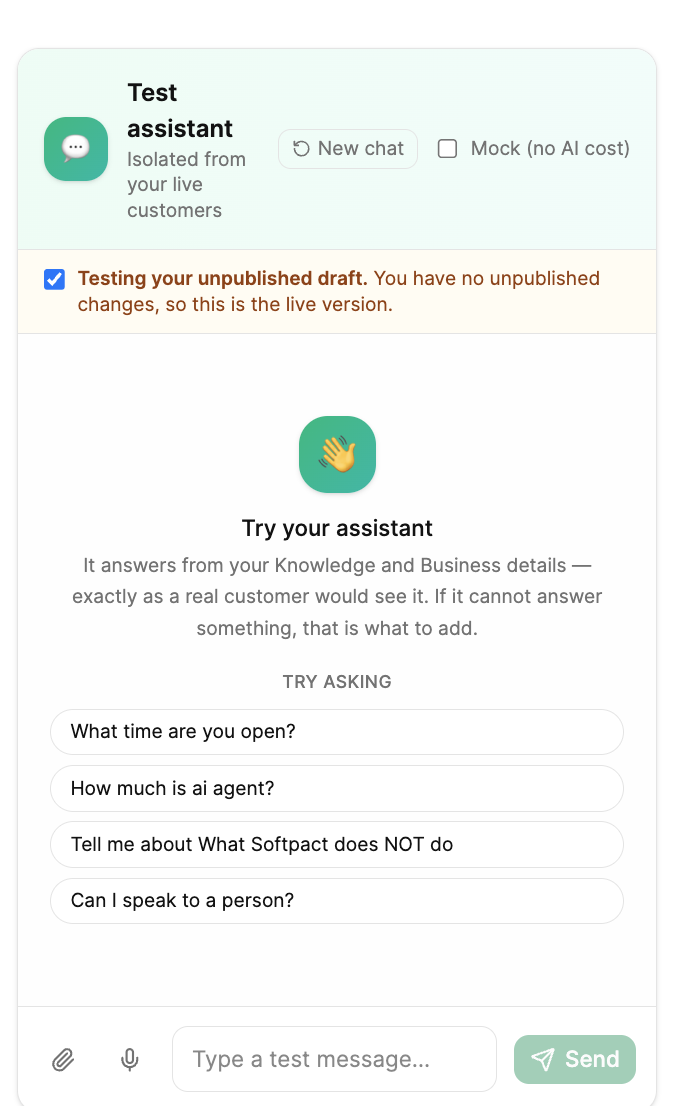
Tu asistente contesta en el idioma en el que le han escrito, usando solo las entradas que marcaste como activas.
Con Google Calendar o Cal.com conectados, la disponibilidad se vuelve a leer en el momento de escribir, así que el hueco no se puede coger dos veces.
Se capta un email y se puntúa, y en menos de un minuto se escribe en tu Google Sheet o se envía a tu endpoint.
La ficha de escalada llega a tu bot de avisos de Telegram con el cliente, el canal, el motivo y los últimos cinco mensajes.
Saludo, pregunta, respuesta, horas reales de tu calendario, la cita escrita y el lead en tu bandeja, todo en una conversación y sin pedirle a nadie que rellene un formulario. Cuando no sabe algo lo dice y te busca, que es la única razón por la que puedes fiarte del resto.
El hilo completo tal como lo vio el cliente, con el aviso de IA antepuesto a la primera respuesta antes de guardar el mensaje, y el motivo de escalada adjunto si se levantó alguno.
Cinco motivos de escalada: poca confianza, tema sensible, petición explícita, fallo de una herramienta y otros.
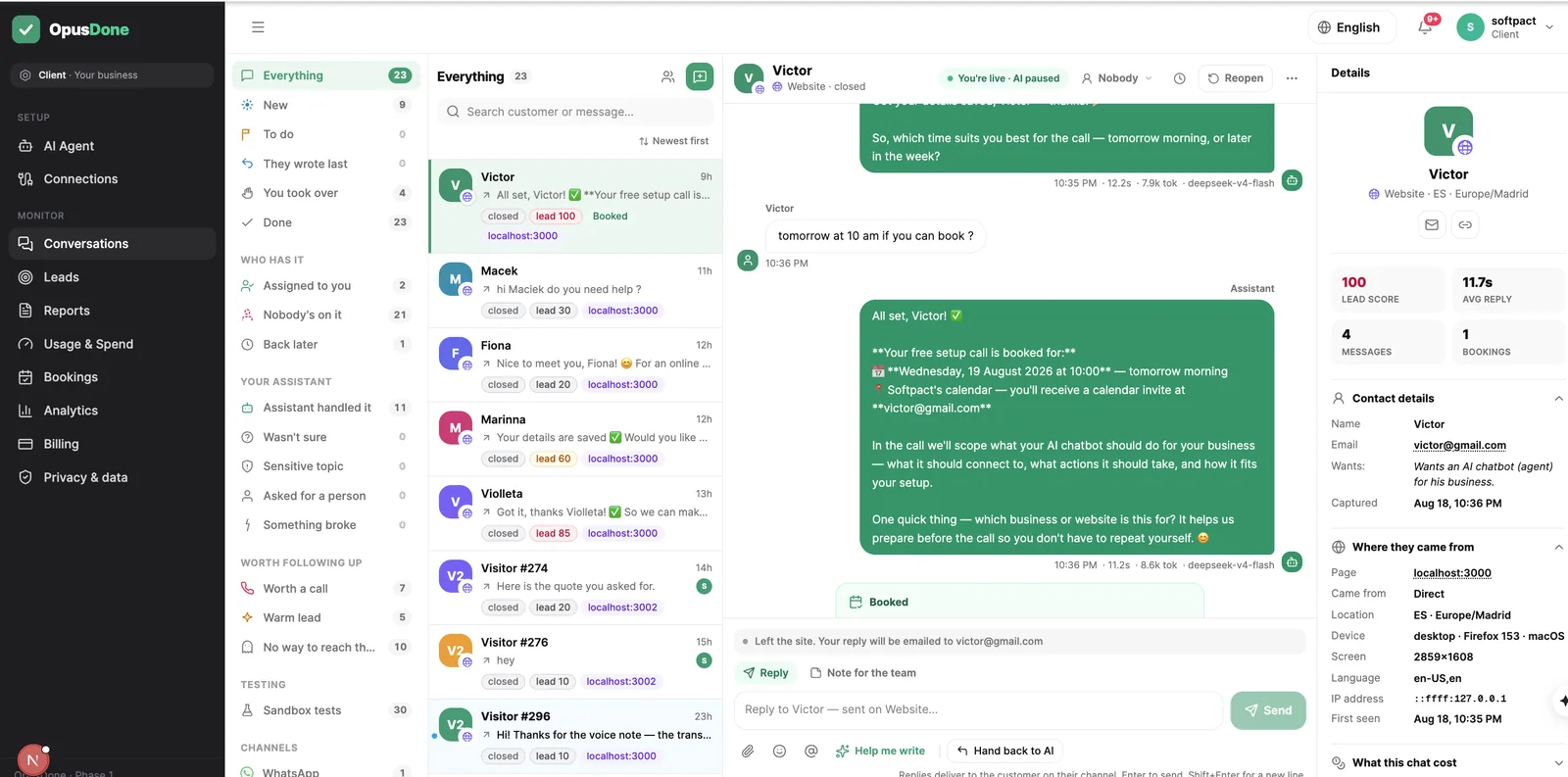
El hueco que eligió el cliente, escrito directamente en Google Calendar o Cal.com con dos horas de antelación mínima por defecto. Los días de cierre y el horario se comprobaron antes de ofrecer ninguna opción.
La disponibilidad se vuelve a leer en el momento de escribir, así que no puede duplicar reservas.

Un lead por persona, deduplicado por email, teléfono o clave de visitante entre canales, y puntuado con pesos publicados: abrir el chat +10, interactuar +10, nombre +10, empresa o web +25, email +40, teléfono +40, reserva +40, con tope de 100.
Se te avisa a partir de 50. Caliente es 75, templado 50, frío 30.

Una pequeña ventana de chat en la esquina, con el nombre de tu negocio y un saludo que escribiste tú. Una línea de código, y la conversación que empieza es la misma que habría empezado desde un código impreso.

Nada de esto necesita a un desarrollador después de la primera línea.
Esto no son tendencias ni ajustes por defecto. Son reglas del runtime, y se mantienen aunque el cliente insista.
Precios, plazos, capacidades, disponibilidad: si no está en el conocimiento que has aprobado, no está en la respuesta. La instrucción es explícita, y la salida es una persona, no una suposición.
Un bloque aparte le prohíbe ofrecer acciones que no puede hacer. No puede comprobar stock, seguir un pedido, enviar un documento, aplicar un descuento ni decir que lo mira y te escribe. Esa regla se escribió después de que una respuesta en el sandbox se ofreciera a consultar un histórico de precios al que no tenía forma de llegar.
No hay capacidad de visión. Una foto o un archivo que no puede leer se salta el modelo por completo: un reconocimiento honesto, una escalada, y tu bandeja de entrada muestra lo que ha llegado.
Si un cliente pide hablar con una persona y el modelo no escala, el runtime crea la escalada por su cuenta. Cualquier herramienta que falle escala también, y la conversación sigue en lugar de quedarse parada.
Las páginas importadas de tu web aterrizan como pendientes de aprobación, nunca activas. Tú las lees y las apruebas, o no llegan jamás a un cliente.

Gratis para crear y probar, sin tarjeta. La prueba dura catorce días desde el día en que publicas. Consulta los planes de hoy en la página de precios.
Empezar