Ella quiere el sábado y tú tienes el bol de tinte en la mano.
Un asistente de reservas para peluquerías que llena el sábado mientras trabajas.
OpusDone contesta la pregunta del color del sábado con tus dos manos ocupadas, diciendo solo los precios que tú has aprobado y ofreciendo horas de tu calendario de verdad. Ella escribe en mitad de un servicio, y la respuesta no puede esperar a que cierres caja a las siete, porque para entonces ya ha reservado en el salón de al lado. Escribe la cita en tu Google Calendar o tu Cal.com y vuelve a comprobar la disponibilidad justo al reservar, así que nadie se queda con un hueco doble. Funciona en el chat de tu web y en Telegram.
- Contesta con tus manos ocupadas
- Solo los precios que has aprobado
- Dos clientas no cogen un mismo hueco
Revisado el

Precios, horarios, el sábado. Pregúntale.
opusdone.com/go/demo
La gente sí se para a leer tu escaparate.
Alguien pasa a las ocho de la tarde, le gusta el sitio y quiere saber cuánto cuesta un balayage y si queda algo el sábado. Las luces están apagadas. Un código en el cristal responde las dos cosas y le ofrece una hora.
En el cristal
Precios, cuánto se tarda, si coges clientas nuevas: respondido desde la acera.
En la lista de precios
La tarjeta que ya imprimes, con una línea al pie que además reserva.
En la tarjeta de cita
La que se guardan en el bolso. Volver a reservar pasa a ser un escaneo en vez de una llamada.
Junto al espejo
Cuarenta minutos con un color puesto son cuarenta minutos para preguntar por el siguiente tratamiento.
Ese código abre nuestro propio asistente de OpusDone, el mismo que tendría tu salón. Cuando más de una persona hace un tratamiento, la clienta elige con quién, y solo se le ofrecen las horas que esa persona tiene libres de verdad.
Ella quiere color el sábado
Estás en mitad de un servicio. Tus dos manos están ocupadas. El chat no.
- 11:20
Las dos manos en el color
Una clienta escribe por el sábado mientras estás en el lavacabezas y no puedes parar a contestar.
- 11:21
Seis horas, ni una más
Ofrece como mucho seis huecos y nunca más de dos de un mismo día.
- 11:24
Escrita mientras aclaras
La disponibilidad se vuelve a leer en el momento de escribir, así que nadie más se queda con ese mismo hueco.
- 15:40
Un precio que no pusiste
Dice claramente que no lo sabe, y te pasa la conversación.
- 19:15
Cerrar el lunes
Un clic en el calendario del mes cierra el día, y aparece como cerrado en tu calendario.
No puedes atender a la clienta que tienes delante y a la del móvil.
Los mensajes llegan en mitad de un servicio
Papeles puestos, temporizador en marcha y el móvil boca abajo en el carro. La consulta es fácil — quiere un sábado — pero contestarla significa parar, y parar no sale gratis.
El color es una conversación antes de ser una cita
Cuánto se tarda. Si cambia el precio con el pelo largo. Si hace falta prueba de alergia antes. Tres mensajes antes de que nadie toque la agenda, y los tres pasan después de cerrar.
El domingo por la noche la gente organiza su semana
Tu hora punta de consultas es una de las horas que tienes cerrado. El lunes te encuentras once mensajes, y cuatro son para huecos que ya se han ido.
¿Cómo llega OpusDone de tu lista de precios a un sábado lleno?
Lo configuras una vez, con las manos libres, y él trabaja los turnos que tú no puedes.
- 01
Saca tus servicios de tu propia web
El rastreo encuentra tus páginas de servicios, precios, preguntas frecuentes, contacto y horario por palabras clave en inglés y en español, y después lee la meta descripción, las etiquetas Open Graph y el JSON-LD para sacar tu dirección, tu teléfono y tu horario. Una sola pasada del modelo convierte eso en servicios, preguntas frecuentes y políticas estructuradas, más cuatro a diez borradores de conocimiento. Solo campos vacíos: una descripción que escribiste tú se queda exactamente como la escribiste. - 02
Tú decides qué puede decir sobre el color
Nada llega al asistente hasta que lo marcas como activo. Los borradores, lo importado pendiente de aprobar, lo archivado y lo rechazado siguen siendo invisibles, así que la oferta de la temporada pasada no puede reaparecer un viernes por la noche. Cada turno tiene un presupuesto de conocimiento de 12.000 caracteres y ninguna entrada puede llevarse más del 40 %, así que tu política de anulaciones no queda nunca enterrada detrás de una página larguísima sobre la marca de tinte que usas. - 03
Pones horario, los lunes de cierre y los márgenes
Los días cerrados se ponen haciendo clic en un día o arrastrando un rango en el calendario del mes, así que un salón que cierra los lunes tarda unos diez segundos en describirse. Los huecos son de 30 minutos por defecto, la antelación mínima 120 minutos, los márgenes cero y el horizonte 60 días: cambia lo que quieras. Las horas caen siempre en una rejilla fija de 15 minutos. Los cierres se replican en Google como un evento de todo el día con el nombre de tu salón, y borrar ese evento no reabre el día. - 04
Conectas una agenda para el salón, o una para cada profesional
Google Calendar por OAuth, o Cal.com con una clave de API. Lee todos los calendarios que marques como ocupados y los fusiona, así que un día de formación o un compromiso personal bloquean un hueco del negocio en lugar de quedarse al lado. Puede dar cita al salón en conjunto, o a una profesional concreta en cuanto cada una tiene su propia agenda, y los permisos son estrechos: leer y crear eventos, nunca borrar un calendario. - 05
Lo pruebas como una clienta que quiere color el sábado
El sandbox ejecuta tus instrucciones reales y tus herramientas reales, y se detiene antes de escribir nada: ni citas, ni leads, ni avisos, ni analítica. Pregúntale lo incómodo: las raíces, un precio que preferirías dar en persona, si abrís el lunes. Es gratis y nunca está detrás de un plan, así que puedes seguir afinándolo hasta que suene como la persona de tu mostrador. - 06
Una etiqueta script, y coge los mensajes que tú no puedes
El widget es una línea en la web que ya tienes, y Telegram es el segundo canal activo; los dos entran en la misma función, así que la respuesta es idéntica por la puerta que sea. El horario y los días cerrados se comprueban antes de ofrecer un hueco y otra vez antes de escribirlo, la disponibilidad se relee en el momento de escribir para que dos clientas no cojan el mismo hueco, y ofrece como mucho seis opciones con no más de dos de un mismo día. Contesta en el idioma en el que ha escrito la clienta, y cada conversación lleva el aviso de IA que exige el artículo 50 del Reglamento Europeo de IA.
El sábado se llena mientras tienes las dos manos ocupadas.
Una clienta pregunta por un balayage a las nueve de la noche y recibe una hora real con la profesional que lo hace: su horario, su duración de cita, su descanso. Cada precio que da es uno que tú has escrito y marcado como activo. Las citas las lees por la mañana.
¿De qué puede encargarse OpusDone mientras trabajas?
Las preguntas que te quita del mostrador
Cinco que responde hoy, con el conocimiento que tú has aprobado: «¿Cuánto cuestan unas mechas de cabeza entera?» · «¿Tenéis algo el sábado por la tarde?» · «¿Cuánto tiempo tengo que reservarme para un balayage?» · «¿Necesito prueba de alergia antes del tinte, y cuándo?» · «¿Hacéis corte de caballero sin cita?».
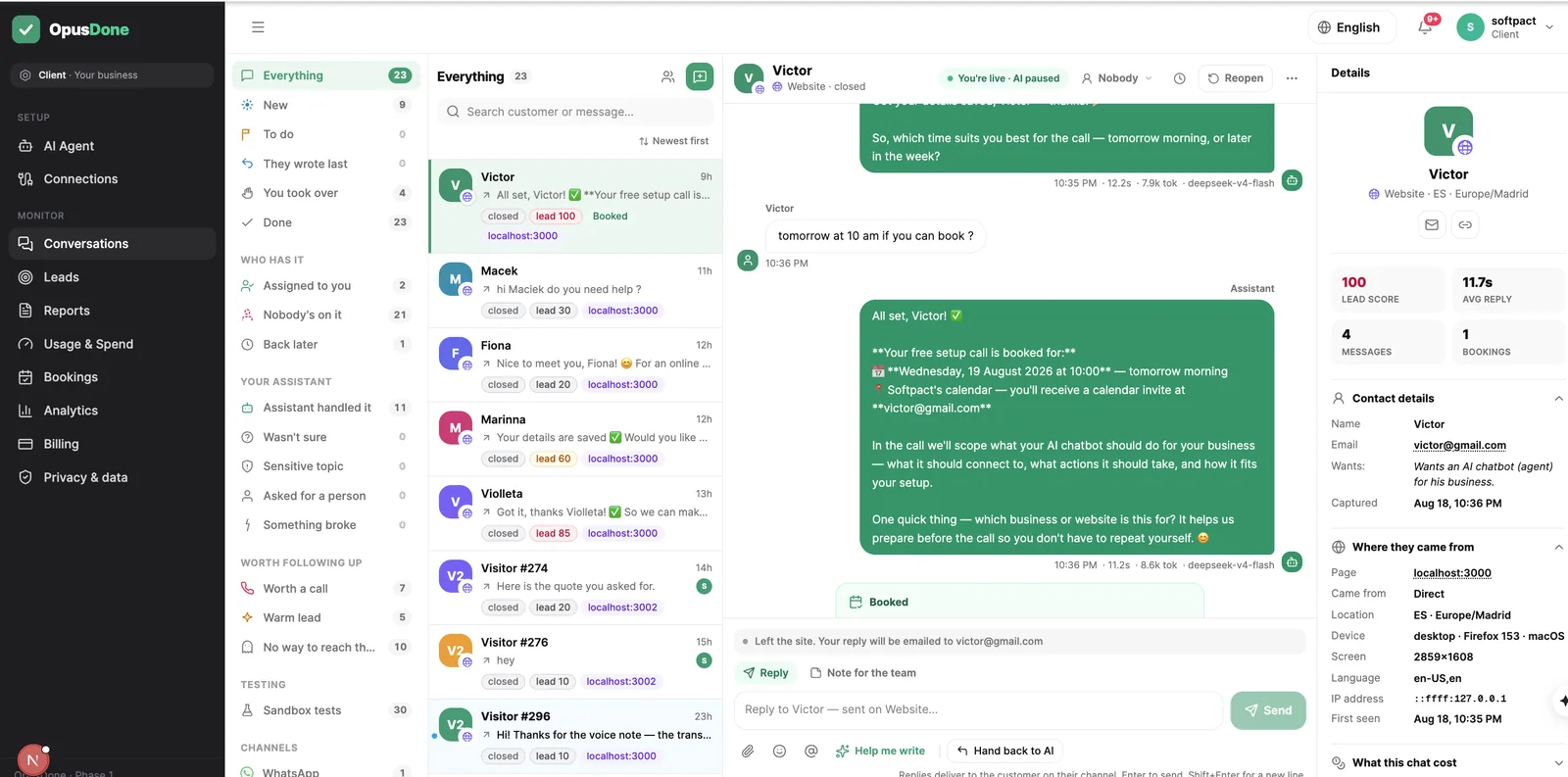
La agenda dice la verdad, también los días que cierras
Cerrar un día es un clic en el calendario del mes, o arrastrar sobre un rango para las vacaciones de agosto, y se replica en Google como un evento de todo el día «Closed — {tu negocio}». Los cierres se verifican en tres sitios independientes, incluido justo antes de escribir la cita, y borrar ese evento en Google no reabre el día por lo bajo.
Antelación mínima de 120 minutos por defecto. Horizonte de 60 días. Todo editable.

Una etiqueta script en la web, y Telegram si lo quieres en el móvil
El widget es una sola etiqueta script, sin iframe, y se pone en las páginas que ya tienes. Telegram es el otro canal activo, y también es donde te avisamos y donde tomas el control de un chat en dos toques. A quien cerró la pestaña antes de que contestaras le llega tu respuesta por email.
El widget web y Telegram son hoy los dos canales activos.
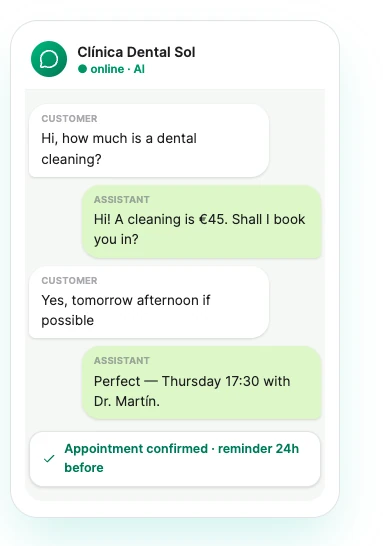
La disponibilidad se relee en el momento de escribir; una hora ofrecida antes en la conversación no es nunca una reserva.
¿Qué no hará nunca OpusDone en tu salón?
Aquí no hay ninguna suposición disfrazada de respuesta.
No dirá un precio que tú no hayas puesto
Ni inventos, ni horquillas, ni «suele estar sobre». Si el servicio no está en tu conocimiento activo, lo dice y te trae a la conversación.
No repartirá el trabajo entre tus profesionales
La clienta elige a su profesional, o coge la primera hora que tenga libre cualquiera. No hay un turno rotatorio que divida la semana a partes iguales entre los sillones: esa decisión se queda en el mostrador, que es su sitio.
No mirará la foto que ella manda
No entiende imágenes, así que no lee una foto de inspiración ni juzga una raíz. Un adjunto que no puede leer se salta el modelo por completo: lo dice y va a buscar a una persona.
No duplicará una cita del sábado
La disponibilidad se relee en vivo en el momento de escribir, así que las horas ofrecidas antes en el chat nunca se tratan como una reserva. Si un hueco se va por el camino, ella recibe alternativas, no un error.
Dudas del asistente de reservas para peluquerías
¿Pueden las clientas pedir cita con su profesional de siempre?
Cerramos dos semanas en agosto. ¿Cuánto trabajo es eso?
La mitad de nuestras clientas escriben en español y algunas en inglés.
¿Y las clientas que sencillamente no aparecen?
¿Contesta a nuestros mensajes de Instagram?
Una clienta quiere anular a las diez de la noche. ¿Qué hace?
Mis servicios van de veinte minutos a cuatro horas. ¿Puede con eso?

Más para peluquerías y centros de estética
Ella reserva el sábado con tus manos todavía ocupadas
Una agenda para el salón, o una para cada profesional, sobre Google Calendar o Cal.com. Se comprueban los días cerrados y el horario de trabajo, y un hueco que se pierde entre la comprobación y la escritura produce alternativas, no un error.
Empezar