Mesa para seis el viernes, y la pregunta del gluten.
Un asistente de reservas para restaurantes que coge la mesa de las 19:40.
OpusDone coge la mesa del viernes para seis a las 19:40 y la escribe en tu calendario, que es justo el momento en el que nadie en sala puede llegar a un teclado. La pregunta del sin gluten llega con ella, y esa tiene límites. Responde sobre alérgenos solo hasta donde llegan las notas que has aprobado, y el resto se lo pasa a una persona. De tu cocina no se inventa nada.
- Responde durante todo el servicio
- Los alérgenos van a una persona
- Reservas escritas en tu calendario
Revisado el

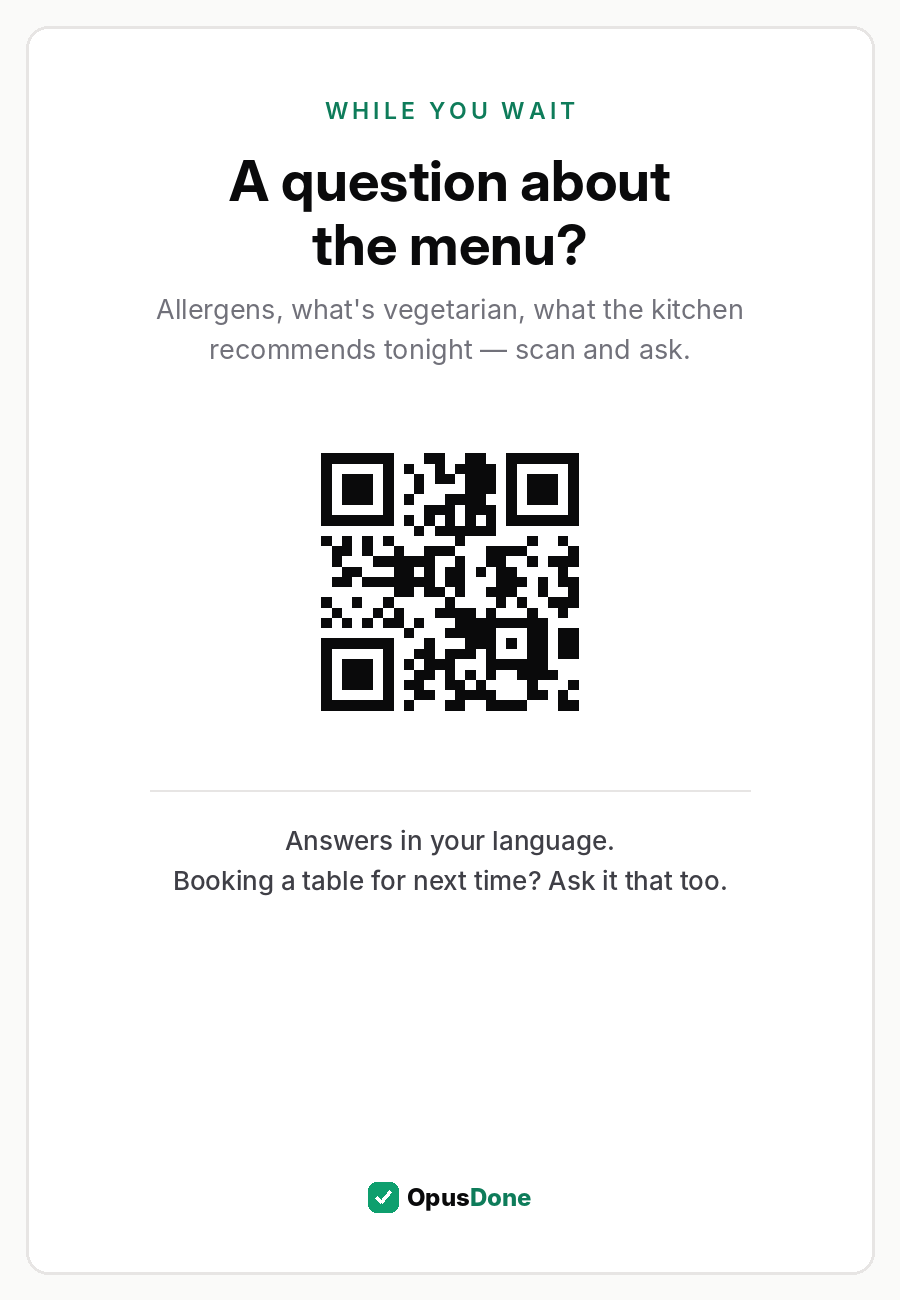
Ponlo en la tarjeta de mesa, no solo en la web.
Un grupo se sienta y quiere saber qué hay sin gluten. La cocina está a tope, faltan dos personas en sala y la respuesta está a cuatro minutos. Un código en la tarjeta de mesa la da ahora, en el idioma en el que estén hablando.
En la mesa
Alérgenos, qué hay vegetariano, de qué está orgullosa la cocina esta noche, cuando no hay nadie libre para preguntar.
En el escaparate
Alguien leyendo la carta en el cristal a las diez y media de la noche, decidiendo sobre mañana.
En la bolsa de para llevar
El pedido que salió hace una hora es una superficie. El ticket dentro de la bolsa, también.
En la carta impresa
Una línea al pie. Responde las seis preguntas que la carta nunca pudo incluir.
Ese código abre nuestro propio asistente de OpusDone, el mismo que tendría tu restaurante. Ofrece horas de tu calendario real y nunca confirma una mesa que no puedes sentar. Lo que tenga que ver con una alergia se responde con lo que tú aprobaste, y con nada más.
Mesa para seis y la pregunta del gluten
Estáis los dos en el pase. La reserva se coge igual.
- 12:55
En pleno servicio, seis personas
Entra una petición para el viernes por la noche mientras hay nueve comandas esperando a salir.
- 12:56
Viernes, dos opciones
Ofrece como mucho dos horas del propio viernes y completa el resto con días cercanos.
- 12:58
La pregunta del gluten
Repite exactamente lo que escribiste sobre el gluten y pasa a una persona todo lo que va más allá.
- 19:35
Una anulación de última hora
Le lee la reserva al cliente y le pide que confirme antes de quitarla.
- 23:40
Después de la última mesa
El resumen semanal muestra qué llegó después de cerrar y cuánto se resolvió sin ti.
¿De qué puede ocuparse OpusDone con el pase lleno?
Escribe la hora en tu calendario y no la pierde
Ofrece como mucho seis horas, y nunca más de dos del mismo día, contrastadas con tu horario de servicio y con todos los días que tienes cerrado, y revisadas otra vez en el momento de escribir para que dos grupos no puedan coger el mismo hueco. Cerrar el restaurante por vacaciones es un clic, o un arrastre sobre un rango, y se refleja en Google como un evento de día completo de cierre.
Google Calendar o Cal.com. Reserva tiempo, no números de mesa: el plano de sala sigue siendo tuyo.

Las preguntas que te quita de encima
Cinco que responde hoy mismo, con conocimiento que tú has aprobado: «¿Tenéis mesa para seis el viernes a las nueve?» · «¿Hay opción sin gluten en la carta?» · «¿Tenéis tronas?» · «¿Podemos llevar al perro a la terraza?» · «¿El menú del día lo servís los sábados?».
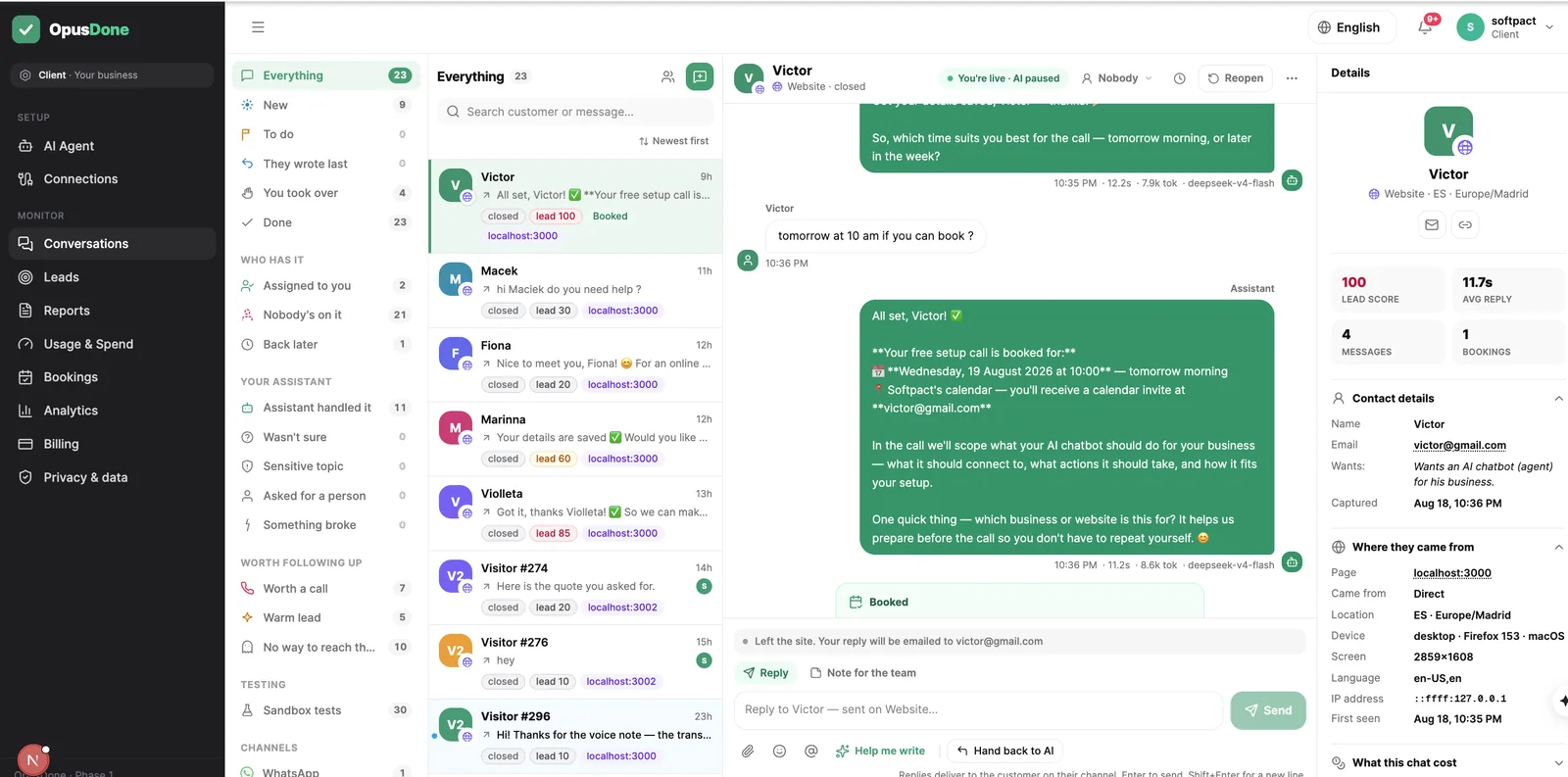
Una etiqueta de script en la web, y Telegram en el bolsillo
El widget es una sola etiqueta de script, sin iframe, y Telegram es el otro canal activo — gratis de conectar, y donde te llega la tarjeta con los cinco últimos mensajes y el botón para tomar el control. Un cliente que cerró la pestaña antes de que llegaras a él recibe tu respuesta por correo.
El widget de la web y Telegram son los canales activos hoy.
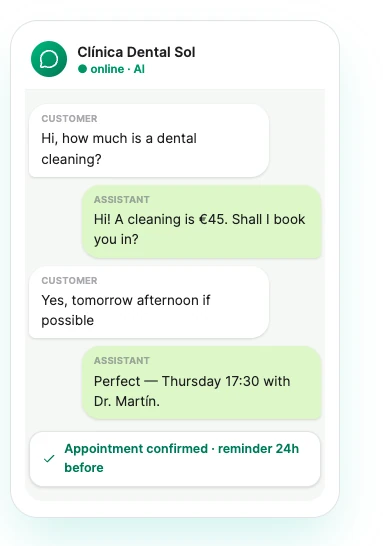
¿Por qué las peticiones de mesa caen en los peores veinte minutos del día?
El pico de servicio y las consultas comparten reloj
La gente decide dónde cena mientras tú estás emplatando. El mensaje se queda ahí hasta las once, y el grupo de seis ya ha reservado en el local de dos puertas más allá, que contestó en un minuto.
La pregunta de la dieta nunca es sencilla
Sin gluten, alergia a los frutos secos, un vegano en el grupo. Es una pregunta legítima y merece una respuesta cuidadosa de alguien que conoce la cocina, no una suposición simpática de una máquina.
La mitad de las preguntas no son reservas
Tronas, perros en la terraza, el menú del día, si abrís el lunes de un festivo. Cosas pequeñas, repetidas sin fin, y cada una es una persona que deja la sala.
De tu carta a una mesa para seis
Se hace una vez, en la hora tranquila después de comer. No cambia nada del pase, de la sala ni de la caja.
- 01
Lee tu web para sacar carta, horario y dirección
El rastreo encuentra tus páginas de carta, preguntas frecuentes, contacto y horario por palabras clave en inglés y en español, y luego lee la meta descripción, las etiquetas Open Graph y el JSON-LD para sacar la dirección, el teléfono y el horario. Una pasada del modelo lo convierte en servicios estructurados, preguntas frecuentes, políticas y de cuatro a diez entradas de conocimiento en borrador. Solo escribe en campos vacíos, así que lo que hayas tecleado tú sobrevive intacto. - 02
Apruebas cada línea que habla de la comida
Solo las entradas marcadas como activas llegan al asistente; los borradores, las importaciones pendientes de aprobación y las entradas archivadas o rechazadas le son invisibles. Aquí es donde decides, por escrito, qué se puede decir exactamente sobre platos, alérgenos y menús cerrados — y qué tiene que ir siempre a una persona. Un filtro de calidad descarta el texto de navegación y la morralla de las cookies, todo lo que baje de 80 o pase de 4.000 caracteres, y los casi duplicados con un 85 % de solapamiento. - 03
Fijas el horario de servicio y los días que cierras
El horario de trabajo, más los días cerrados que marcas haciendo clic en un día o arrastrando sobre la quincena que cierras en agosto. El aviso mínimo es de 120 minutos por defecto, la reserva dura 30 minutos, los márgenes son cero y el horizonte de 60 días, todo editable, y las horas caen siempre en una rejilla fija de 15 minutos. Los cierres se reflejan en Google como un evento de día completo con el nombre de tu restaurante, y borrar ese evento no reabre el día. - 04
Conectas la agenda de reservas del restaurante
Google Calendar por OAuth, o Cal.com con una clave de API. Lee y fusiona todos los calendarios que marques como ocupados, así que un privado ya apuntado en la agenda quita el hueco. Guarda la reserva en tu calendario — el plano de sala sigue siendo tuyo — y sus permisos son estrechos: puede leer y crear eventos, y no puede borrar un calendario. - 05
Lo pruebas con una pregunta de viernes noche
El sandbox ejecuta tus instrucciones reales y tus herramientas reales y se detiene antes de escribir nada: ni reserva, ni lead, ni aviso, ni escalada. Pídele mesa para seis el viernes y añade la línea del sin gluten, y mira exactamente dónde deja de responder y pide una persona. Es gratis y nunca está capado, así que puedes reescribir una entrada y volver a probar hasta que suene como lo dirías tú. - 06
Una línea en tu web, y los mensajes dejan de acumularse
El widget es una sola etiqueta de script en la web que ya tienes, y Telegram es el segundo canal activo; los dos entran por la misma función, así que la respuesta no depende de la puerta. El horario y los días cerrados se comprueban antes de ofrecer un hueco y otra vez antes de escribirlo, la disponibilidad se relee en el momento de escribir para que dos grupos no puedan coger la misma mesa, y ofrece como mucho seis opciones y nunca más de dos del mismo día. Responde en el idioma en el que escribió el cliente, y el aviso de IA que exige el artículo 50 del Reglamento Europeo de IA se añade una vez por conversación y ningún prompt puede quitarlo.
La mesa de las 19:40 queda reservada antes de que alguien coja el teléfono.
Comensales, hora, la pregunta del sin gluten y el idioma en el que se ha preguntado, atendidos mientras faltan dos personas en sala. Solo ofrece horas en las que de verdad puedes sentar a alguien, y cualquier cosa sobre una alergia se responde con lo que tú escribiste y aprobaste, y después pasa a una persona.
Números que puedes cambiar
¿Qué no hará nunca OpusDone en tu comedor?
Un restaurante vive de que le crean. Por eso el asistente solo dice cosas que tú ya has dicho.
No improvisará una carta
Ni inventa platos, ni precios, ni vinos, ni un menú de Navidad que no esté aprobado. Si no está activo en tu conocimiento, lo dice y te pasa al cliente.
No tomará una comanda ni un pago
No puede consultar stock, seguir un pedido, aplicar un descuento ni enviar un documento. Reserva tiempo y responde preguntas. Lo demás no está en la carta.
No sobrerreservará el viernes
La disponibilidad se lee en vivo en el instante de escribir, así que las horas que se hayan mencionado antes en el chat nunca son una mesa guardada. Si el hueco se ocupa por el camino, el cliente recibe alternativas en lugar de un error.
No fingirá ser el maître
El aviso de IA que exige el artículo 50 del Reglamento Europeo de IA se añade después de que el modelo escriba, una vez por conversación y en el idioma del cliente, y ningún prompt puede quitarlo.
Dudas sobre las reservas de mesa
¿Esto sustituye a nuestro sistema de mesas?
Los turistas escriben en cinco idiomas. ¿Eso importa?
Alguien anula a las nueve de un viernes.
Una mesa de doce con señal es una conversación que quiero llevar yo.
Un grupo de catorce quiere la terraza entera.
¿Qué pasa con una reserva hecha justo antes de abrir?
Las alergias son un asunto legal, no un asunto de chat.

Más para la sala y la terraza
Mesa para seis reservada en pleno servicio
Una agenda de reservas para el restaurante, en Google Calendar o Cal.com. La disponibilidad se relee en el momento de escribir, así que dos grupos nunca pueden recibir la misma mesa, y cerrar un día es un clic.
Empezar