Connect your calendar once, then close a day with one click.
OpusDone books into Google Calendar and Cal.com, and no other calendar provider. It reads every calendar you mark as busy, writes only where you allow it, and takes its closures from a month view you control. Changes reach the agent in about 15 seconds.
- OAuth, no API key for Google
- Closures mirrored into Google
- Partial reads raise, never assume free
Reviewed
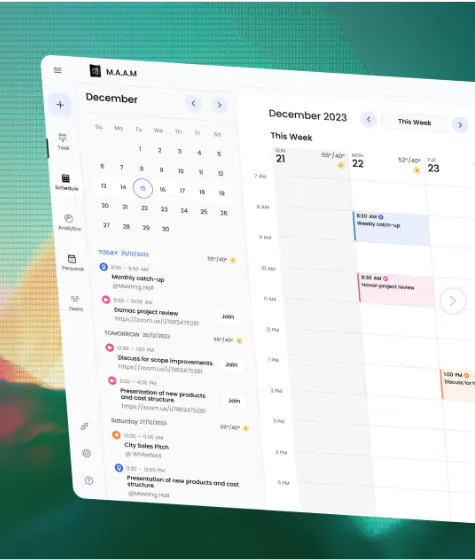
Which calendars does OpusDone connect to?
freeBusy sweeps every calendar you marked busy and merges the result, so a personal commitment blocks a business slot. The busy endpoint returns times only, never event titles. A partial read raises rather than treating a calendar it could not read as free.

Google Calendar
Connect with OAuth, no API key. Closures are mirrored in as an all-day “Closed — {your business}” event; deleting that event does not reopen the day.

Cal.com
Connect with an API key. Bookings can wait pending until you accept them, and no-shows are recorded against the appointment.
The calendar is never as tidy as the integration assumes.
Your time is spread over several calendars
The dentist appointment on your personal calendar is still a reason you cannot see a customer at 11:00. An integration that reads one calendar will book straight over it.
Closing a week should not mean creating events
August, a long weekend, the Monday after a fair. Blocking those by hand, in the right calendar, in the right timezone, is exactly the job that gets forgotten.
A half-read calendar looks completely free
When one calendar in the sweep fails to answer, the easy thing is to treat it as empty. That is how a booking lands on top of something you had already committed to.
How do you connect a calendar to OpusDone?
- 01
Pick your provider
Google Calendar or Cal.com. Connect one calendar for the business, or one for each person customers can book with — up to five on Business and ten on Pro. - 02
Google: sign in with OAuth
No API key to copy anywhere. You approve the connection in Google and come back to the dashboard. - 03
Cal.com: paste an API key
One field, one key. Cal.com then brings its own extras, including a pending to accepted confirmation step and recorded no-shows. - 04
Mark which calendars count as busy
Every calendar you tick is swept for free and busy time and merged into one picture, so a personal commitment blocks a business slot. - 05
Set your working hours
The hours editor refuses to save an empty week, because an agent with no hours is an agent that can offer anything. - 06
Block your closures
Click one day, or drag across a range, in the month calendar. Holidays, a fair, the week you are away. - 07
Try it in the sandbox
The sandbox runs your real booking tools and stops immediately before the write, unless you deliberately tick “book for real”.
Connect it once. Close a day in one click.
Google Calendar or Cal.com, connected with OAuth, nothing to maintain. Every calendar you mark busy is swept and merged, so a personal commitment blocks a customer slot without you thinking about it — and the sweep reads times only, never what the event was.
Click a day, drag a range, the calendar closes.
Two providers, one behaviour.
Google Calendar, on narrow scopes
The connection asks for calendar.events and calendar.readonly, deliberately not the full calendar scope. The app can read your free time and create the appointment. It cannot delete your calendars.
OAuth sign-in, nothing to paste.

Cal.com, with confirmation and no-shows
Alongside the same booking gates, Cal.com supports a pending to accepted step, so an appointment can wait for your yes, and lets you record a no-show against the booking.
Connected with an API key.
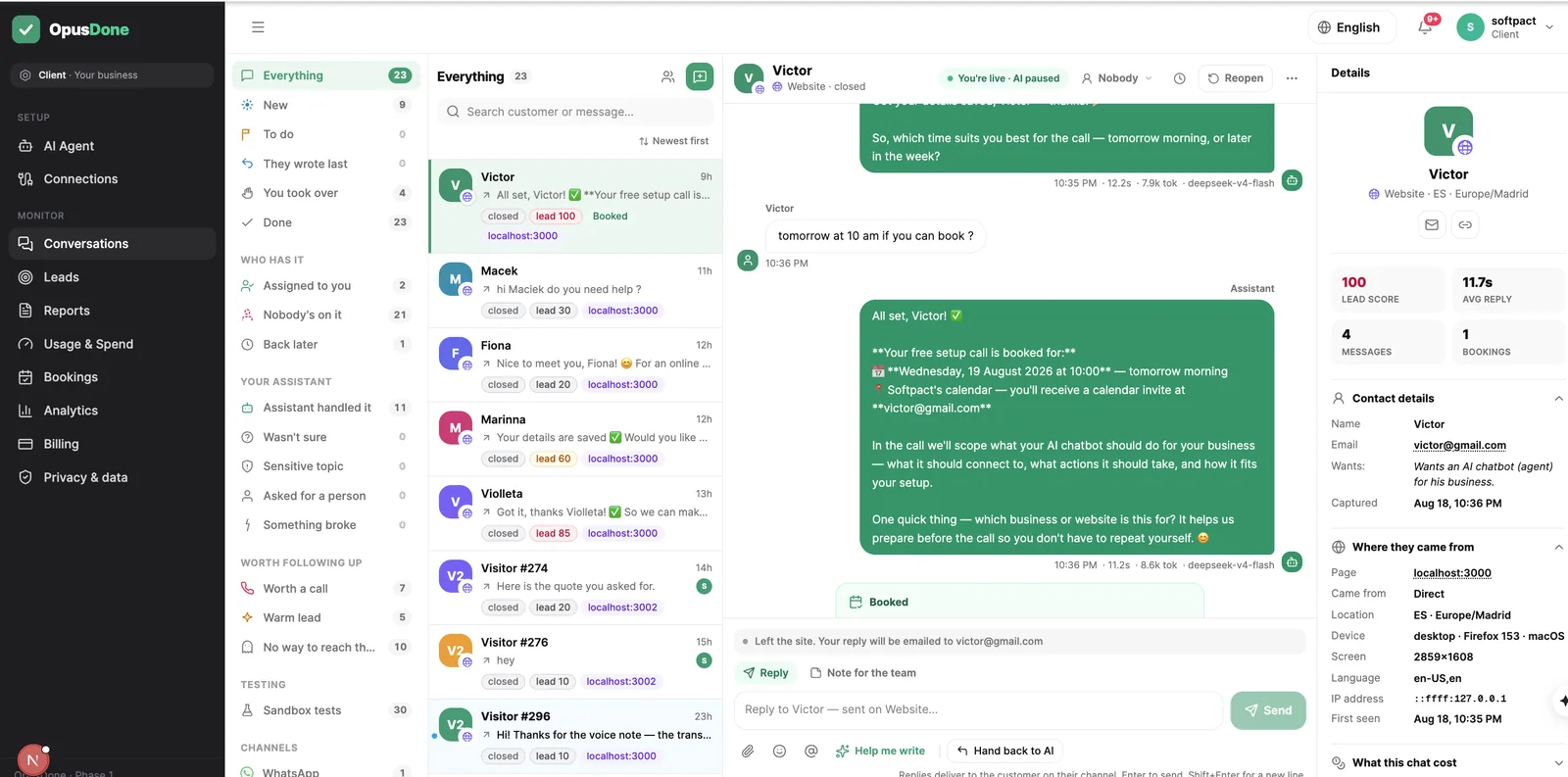
Closures live in OpusDone, mirrored into Google
A blocked range appears in Google as an all-day event titled “Closed — {your business}”. Deleting that mirrored event does not reopen the day, because the closure itself is held here.
Closures are checked in three independent places, one immediately before the write.

What will OpusDone never do to your calendar?
Some of these are permissions we did not ask for. Others are things we decided an agent should not be able to do to a business calendar.
It cannot delete your calendars
The Google scopes stop at events and read access. Full calendar access was available and we did not take it.
It will not treat an unreadable calendar as free
A partial read raises rather than quietly returning a cheerful, empty calendar. Nothing is offered on evidence that did not arrive.
It will not reopen a day because Google says so
The mirrored all-day event is a copy for your benefit. Deleting it in Google leaves the closure standing in OpusDone.
It will not save a week with no hours in it
The editor refuses. An empty week is almost always a mistake, and an agent should not be left guessing what open means.
It will not give each person their own time zone
Every calendar runs on the business time zone. A genuinely distributed team, working in two countries, is not something we are willing to sell yet.
Calendar integration questions, answered
What exactly does OpusDone get access to in Google?
What does Cal.com add over Google Calendar?
What if my calendar disconnects or the token expires?
Will my personal appointments block business slots?
How do I close the shop for a week?
Can I try the connection without real events appearing?

More on booking and availability
Connect your calendar, test it free, then go live.
Edits to hours and closures reach your assistant in about 15 seconds, and the hours editor refuses to save an empty week. A disconnected or expired calendar promises nothing: every booking call returns an offline result and files a human escalation. Free to build and test, no card; 14 days from going live. See the pricing page for today’s plans.
Get started